
Esparsette for Horses: What Makes This Forage Crop Special
Esparsette is a forage crop from the legume family that horses receive as hay, chopped forage, or cobs. It is closely related to alfalfa and clover, provides easily digestible roughage, protein, and minerals, and also contains so-called tannins, or natural astringents. Many horse owners appreciate espadarte as a tasty addition to hay. In this encyclopedia entry, you will learn what is in the plant, how to feed it, and how it differs from alfalfa.
What is espadarte?
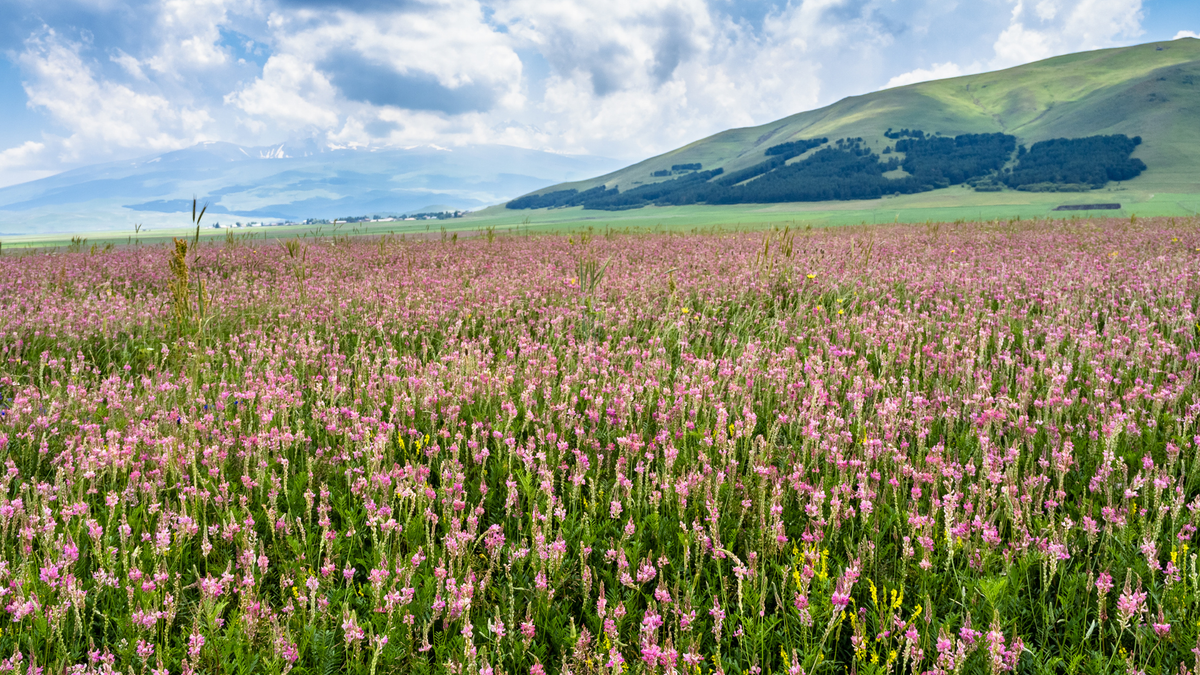
Espadarte (botanical name Onobrychis viciifolia) is a perennial plant with pink to red, grape-like flowers. It grows preferentially on dry, calcareous soils and was once a common feed for horses in many regions. This is also where its old name "sweet clover" or "holy hay" comes from.
Because espadarte forms deep roots and needs little fertilizer, it is now again valued for sustainable agriculture and as a bee pasture.
What nutrients does espadarte contain?
The exact composition depends on the location, time of cutting, and processing. Typical for espadarte are:
| Nutrient | What you should know |
|---|---|
| Roughage | Well structured, important for horse-appropriate feeding |
| Protein | Higher than in grass and hay, usually slightly lower than in alfalfa |
| Calcium | Relatively high content, typical for legumes |
| Tannins | Natural astringents that give the plant its slightly bitter character |
| Sugar and starch | Comparatively low, varies depending on the product |
The tannins make espadarte special among forage crops. They have been intensively researched in animal nutrition for some time. For you as a horse owner, this mainly means: espadarte is an independent feed with a different profile than alfalfa.
Espadarte or alfalfa: What is the difference?
Both plants are legumes and are offered similarly. However, there are some differences:
- Protein: Alfalfa usually contains more protein than espadarte.
- Tannins: Espadarte contains significantly more astringents than alfalfa.
- Taste: Many horses like to eat espadarte very much; it is considered particularly tasty.
- Cultivation: Espadarte is more demanding to grow and is therefore often slightly more expensive.
Which plant is better suited to your horse depends on its overall ration and its needs.
How do you feed espadarte correctly?

Espadarte is available as hay, chopped forage, pellets, or cobs. Cobs are pressed pieces of dried plant that you usually soak before feeding.
- Introduce slowly: Start with a small amount and increase it over one to two weeks.
- See as a supplement: Espadarte complements the basic ration of hay; it does not replace it.
- Soak cobs: Soak cobs according to the manufacturer's instructions so that your horse does not eat them too hastily and dry.
- Adjust the amount to the needs: Follow the feeding recommendation on the package and your horse's weight and work.
- Keep an eye on the ration: Espadarte brings additional protein and calcium into the ration. Take this into account if your horse already gets a lot of concentrate feed or alfalfa.
If your horse has special dietary requirements, it is best to discuss a change with your veterinarian or a specialist in horse feeding.
For which horses is espadarte suitable?
- Horses that like to eat a varied diet: Espadarte brings taste and variety to the ration.
- Horses with a low-sugar and low-starch diet: Espadarte is usually low in sugar and starch, but pay attention to the manufacturer's specifications.
- Older horses: Soaked cobs can also be eaten well with less-than-perfect teeth.
- Sport and leisure horses: As a structured feed with protein, espadarte can sensibly complement the ration.
Espadarte in feed supplements
Espadarte is not only offered as a single feed but is also used as an ingredient in feed supplements. Our Zinc Pellets also contain espadarte, together with organically bound zinc, brewer's yeast, and zeolite. You can read more about the trace element zinc in our encyclopedia entry Zinc in Horses.
Frequently asked questions about espadarte for horses
What is espadarte for horses?
Espadarte is a forage crop from the legume family. Horses receive it as hay, chopped forage, pellets, or cobs. It provides roughage, protein, calcium, and natural astringents.
What are espadarte cobs?
Espadarte cobs are pressed pieces of dried espadarte. They are easy to store and portion out and are usually soaked before feeding.
Is espadarte better than alfalfa?
Not better, but different. Espadarte usually contains less protein, but more astringents than alfalfa. Which plant is suitable depends on your horse's ration and needs.
How much espadarte can a horse get?
This depends on the product, your horse's weight, and its needs. Follow the manufacturer's feeding recommendation and feed espadarte as a supplement to the basic ration of hay.
Can espadarte replace hay?
No. Hay remains the basis of horse feeding. Espadarte is a supplement that brings variety and additional nutrients to the ration.
Conclusion: A valuable addition to the feeding plan
Espadarte is a traditional forage crop with its own profile: It provides roughage, protein, and calcium, contains natural astringents, and is very gladly eaten by many horses. As hay, chopped forage, or cobs, it complements the basic ration and brings variety to the feed trough. Introduce it slowly, take it into account in the overall ration, and seek advice from professionals for special dietary questions.